
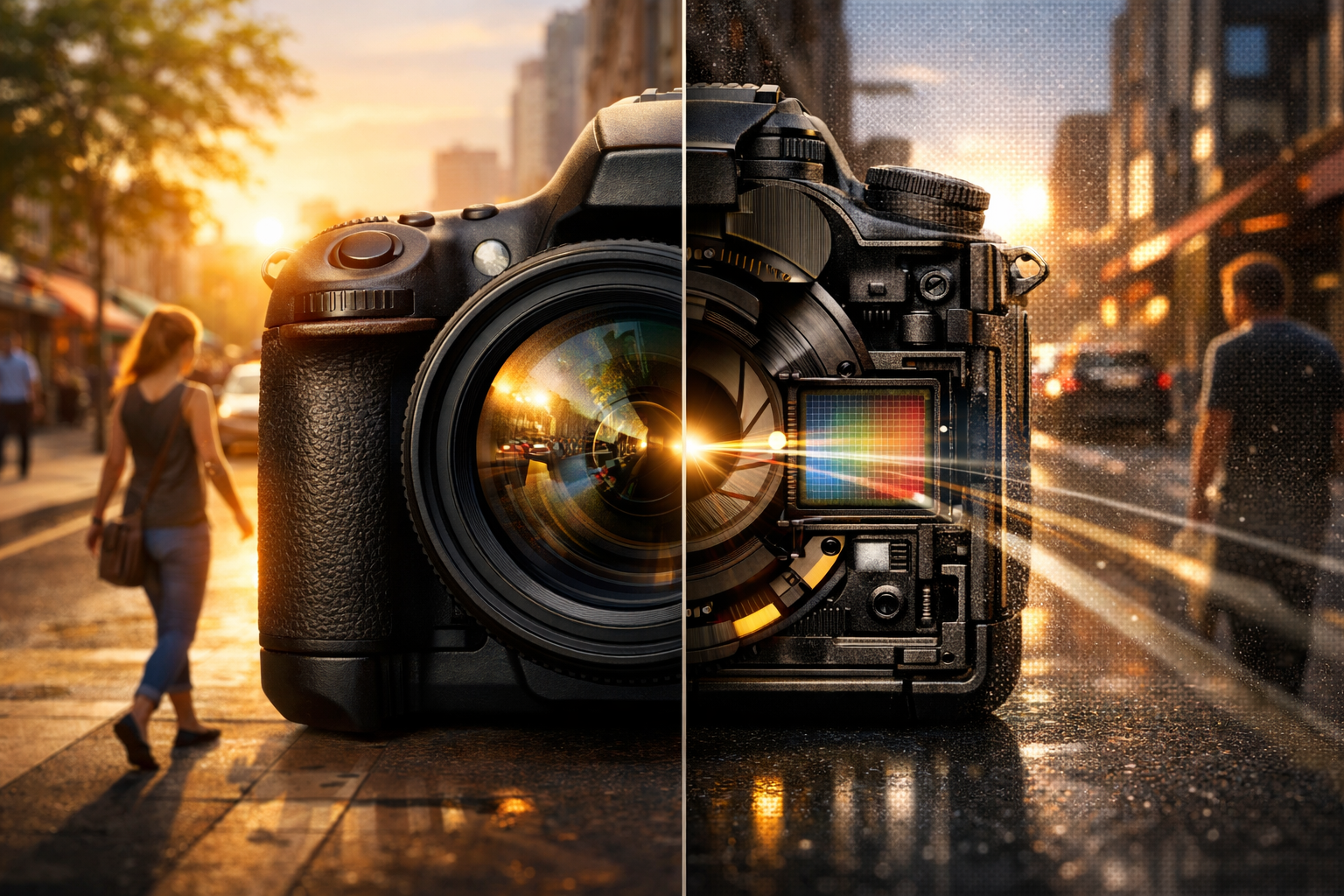
How a Camera Actually Sees the World
How a Camera Sees
A beginner’s guide to understanding what your camera records—and why it matters
At Kemple Photography, we believe good photography starts long before the shutter is pressed.
It begins with understanding how your camera sees—because it doesn’t see the world the way you do.
If you’re new to photography, you’ve probably experienced this moment:
You stand in front of a scene that feels beautiful, balanced, atmospheric…
You take the photo…
And what you see on the screen doesn’t quite match what you remember.
That disconnect isn’t failure.
It’s learning.
Let’s take a calm walkthrough of how a camera actually sees—and how that understanding changes the way you photograph.
Your Eyes and Your Camera See Very Differently
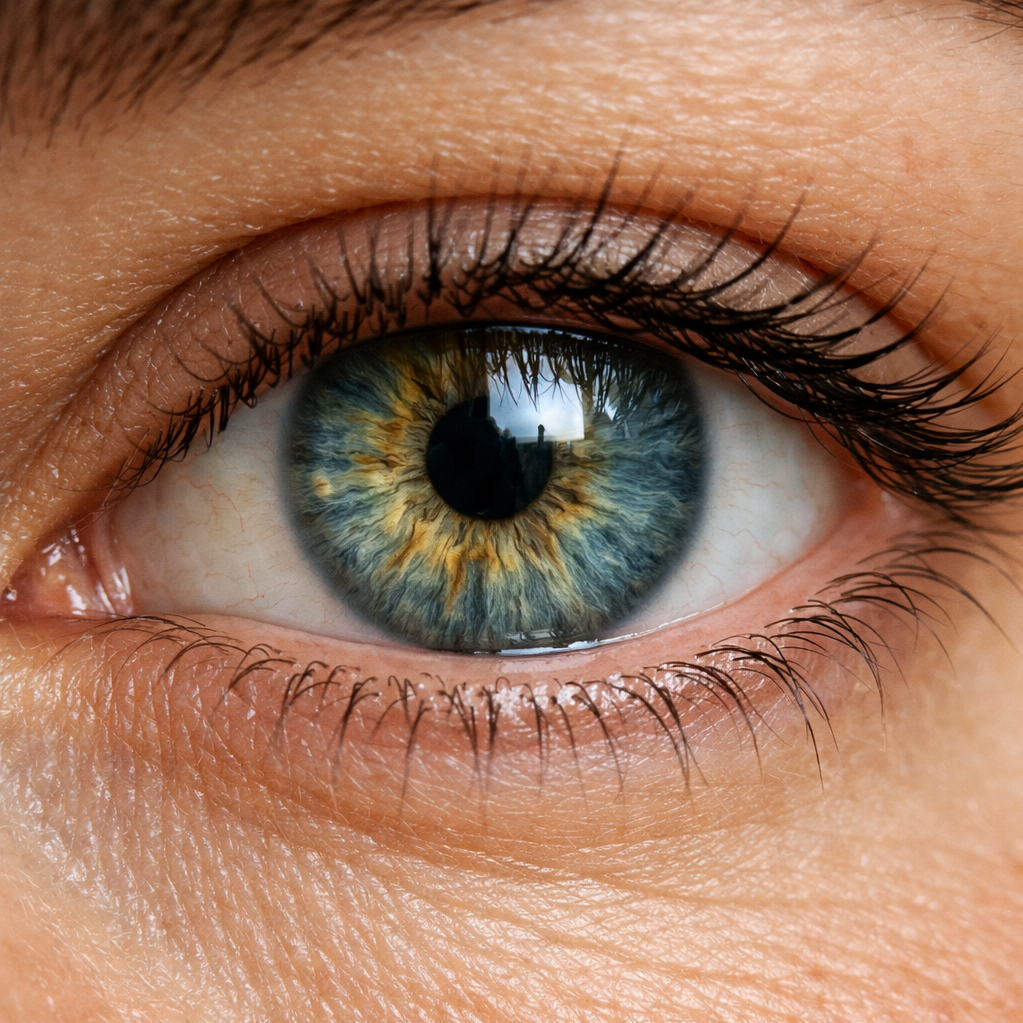
The human eye is extraordinary. It constantly adjusts to changes in light, colour, and contrast without you ever noticing. Bright skies and dark shadows feel natural because your brain quietly balances them. A camera doesn’t do that.
A camera is literal. It records what light is present—nothing more, nothing less. Where your eyes interpret, the camera measures.
Understanding this difference is the first step in becoming a confident photographer.
Cameras Don’t See Objects—They See Light
This is one of the most important ideas in photography.
A camera doesn’t see:
Trees
Faces
Buildings
Landscapes
It reflects light from those objects.
Bright light carries more information.
Low light carries less.
A white subject in shade may look bright to you—but to the camera it’s still low-light. A dark subject in harsh sun may overwhelm the sensor.
Once you start thinking in terms of light rather than subjects, photography becomes far more intentional.
Exposure: How the Camera Collects Light
When you press the shutter, your camera opens its “eye” and lets light hit the sensor. The amount of light collected is controlled by three settings:
Aperture – how wide the lens opens
Shutter Speed – how long light is allowed in
ISO – how sensitive the sensor is to that light
Together, these determine how bright the image is, how motion appears, and how much detail is retained.
The key thing to remember:
The camera isn’t trying to make a beautiful image—it’s just following these rules.
You decide how they’re used.
Focus Is About Distance, Not Importance
When you look at a scene, your eyes instinctively know what matters. Your camera doesn’t.
The camera only understands distance.
Focus simply means:
“At this distance, light converges sharply.”
Everything closer or further away becomes progressively softer. This is why backgrounds blur and foregrounds can disappear, even if they felt important at the time.
Depth of field—the amount of the scene that appears sharp—is a consequence of how the camera sees space, not meaning.
Colour Is Measured, Not Felt
Your brain constantly corrects colour for you. Shade still looks neutral. Indoor lighting doesn’t feel orange. Snow still looks white at sunset.
A camera doesn’t know any of this.
It simply measures the colour of the light source and applies a correction based on your white balance setting. If that guess is off, the entire image shifts warmer or cooler.
This is why photographers often shoot in RAW—to decide later how the camera should interpret the light.
Contrast: Where Cameras Reach Their Limits
Your eyes can see detail in both bright highlights and deep shadows at the same time.
Cameras can’t.
When contrast exceeds the camera’s capability:
Bright areas lose detail and turn white
Dark areas collapse into black
Once that information is gone, it can’t be recovered.
This is why photographers pay close attention to light direction, time of day, and exposure choices—especially outdoors.
The Shift That Changes Everything
Every photographer reaches a moment where something clicks.
You stop asking:
“Why doesn’t the photo look like what I saw?”
And start asking:
“What is the camera actually seeing here?”
That shift is where control begins:
You start shaping light instead of reacting to it
You choose what to prioritise
You photograph with intent, not hope
The camera is honest.
Your role is to interpret.
A Simple Practice Exercise
Try this the next time you’re out with your camera:
Pause before taking the photo
Ask yourself:
Where is the light coming from?
What is the brightest part of the scene?
What is the darkest?
Take one photo
Change one setting
Take it again
You’re not just taking photos—you’re training yourself to see the way the camera sees.
That’s the foundation of photography.
At Kemple Photography, the goal isn’t perfection—it’s awareness.
When you understand how your camera sees, you gain the freedom to shape what it records.
Be clear, be confident and don’t overthink it. The beauty of your story is that it’s going to continue to evolve and your site can evolve with it. Your goal should be to make it feel right for right now. Later will take care of itself. It always does.
Blog Post Title Four
It all begins with an idea.
It all begins with an idea. Maybe you want to launch a business. Maybe you want to turn a hobby into something more. Or maybe you have a creative project to share with the world. Whatever it is, the way you tell your story online can make all the difference.
Don’t worry about sounding professional. Sound like you. There are over 1.5 billion websites out there, but your story is what’s going to separate this one from the rest. If you read the words back and don’t hear your own voice in your head, that’s a good sign you still have more work to do.
Be clear, be confident and don’t overthink it. The beauty of your story is that it’s going to continue to evolve and your site can evolve with it. Your goal should be to make it feel right for right now. Later will take care of itself. It always does.